
What is Construction Steel? Types, Advantages, and Practical Applications
In the construction industry, steel is an indispensable material, playing a crucial role in determining the durability, load-bearing capacity, and lifespan of structures. From residential homes to large-scale infrastructure projects, choosing the right type of steel will optimize costs and ensure long-term safety.
This article by Lintel Steel will help you understand everything about construction steel, from its concept, characteristics, standards, common types, to effective selection and purchasing tips.
What is Construction Steel?
Steel in construction is a type of steel specifically manufactured for use in projects such as houses, bridges, factories, and high-rise buildings. It is usually made from alloys with the main components being iron, carbon, and some other chemical elements, then processed into various forms such as steel bars, steel coils, steel pipes, or steel profiles.
This material has high load-bearing capacity, good durability, and can be combined with concrete to create a strong structure (reinforced concrete). Currently, there are over 3000 different types of steel worldwide, easily meeting the needs of consumers. Depending on construction needs, the appropriate type of steel will be selected. High-quality steel must ensure high hardness, good elasticity, no warping, the ability to be formed into various shapes, and resistance to rust in all natural environmental conditions. These characteristics make steel crucial in construction and its future replacement.
Characteristics of Steel in Construction
Construction steel possesses many outstanding characteristics, making it a top choice in the industry:
Excellent Durability and Load-Bearing Capacity
Steel has excellent tensile, compressive, and bending strength, helping structures withstand environmental impacts such as wind and earthquakes. Its rigid, solid structure (60% heavier than concrete) and high durability are key factors in ensuring the structure’s longevity.
Prefabricated Houses Without Foundations
Can you believe that a house can be built without a foundation? That’s right, this is true for prefabricated houses, as they are built with interconnected metal components, making them easy to install and quickly replace concrete.
Flexibility and Ease of Construction
Steel can be easily fabricated, bent, cut, welded, or shaped as required without losing its mechanical properties. In addition, steel construction time is faster than other traditional materials (brick, wood) and can be mass-produced, easily assembled, disassembled, and replaced.
Excellent bonding with concrete
Steel and concrete have nearly the same thermal expansion coefficient, helping reinforced concrete structures remain stable in various weather conditions.
Long-lasting durability and corrosion resistance
When used correctly and with a good protective coating and anti-corrosion treatment, steel can last for decades to hundreds of years.
Environmentally friendly – 100% recyclable
Steel is one of the few building materials that can be completely recycled without compromising quality. After demolition, steel can be recovered, reused, or remelted. This contributes to minimizing construction waste and protecting the environment.

Standard for Construction Steel
To ensure quality, steel used in construction must comply with national and international standards such as:
-
- ASTM (USA): A widely used international standard
- JIS (Japan): Highly regarded for accuracy and quality
- BS (UK): European standard
- AS/NZS: Australian/New Zealand domestic standards
Reputable suppliers usually provide Certificates of Origin (CO) and Certificates of Quality (CQ) to prove the origin and quality of the steel. Contractors should request to check these documents before signing the contract.
Types of Steel in Construction
There are thousands of types of construction steel in the world, each suited to different requirements. However, based on their basic characteristics and manufacturing processes, construction steel can be divided into the following main groups.
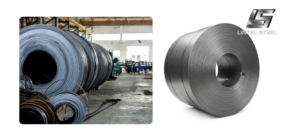
Coil steel
Coils are a type of construction steel in the form of long, flat wires of various sizes. Common steel wire diameters are 6mm, 8mm, 10mm, etc. Typically, the surface of the steel wire is smooth or ribbed. For convenient transportation and storage, steel wire is coiled into large rolls weighing approximately 200kg – 450kg. In cases where customers require it, the weight of the steel coil can reach up to 20,000kg.
Steel coils are produced through hot rolling or cold rolling processes. In hot rolling, the steel is passed through a hot roller to create the coiled product, while in cold rolling, the steel is rolled through cold rollers to create the coiled product.
Pipes steel
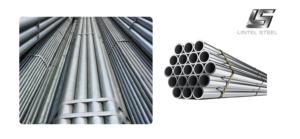
Steel pipes or steel tubes are hollow, box-shaped steel structures available in various shapes: rectangular, square, circular, triangular, D-shaped, etc., with wall thicknesses ranging from 0.7 to 5.1 mm. They are lightweight, have high rigidity and strength, and can be reinforced to increase durability through methods such as steel painting, galvanizing, and fire-resistant coating.
Various types of steel pipes are used in industry, including spiral-welded steel pipes, galvanized steel pipes, high-rise welded steel pipes, and carbon cast steel pipes.
Rebars steels
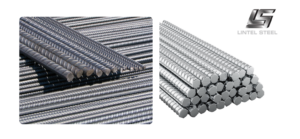
Rebar, also known as concrete reinforcing steel or steel bars, is the most common and important type of construction steel. Common steel diameters are 10mm, 12mm, 20mm, 22mm, etc., with a typical length of 11.7m.
This type of steel has two main product groups: Plain Bar and Deformed bar/Rebar. Plain Bar have a smooth surface and are commonly used in manufacturing and bridge construction. Deformed bar/Rebar has a rough outer surface with ribs and is often used in reinforced concrete structures.
Structural steel
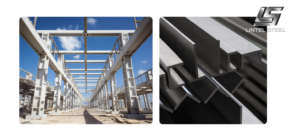
Structural steel comes in many different forms, such as I-beams, H-beams, U-beams, V-beams, etc.
Structural steel is commonly used in factory frames, townhouses, apartment buildings, prefabricated houses, weighing scales, crane girders, and a variety of other construction applications.
Advantages of Steel in Construction
Steel, with its unique crystalline structure and superior strength, is used in many areas of life and construction. To meet the diverse demands of customers, steel products possess numerous advantages over other materials, such as:
- High load-bearing capacity, resistant to bending and damage from external forces;
- High durability, extending the lifespan of structures to 50-70 years in natural environments;
- Excellent resistance to rust, oxidation, and water penetration;
- Easy to install, transport, and maintain;
- Affordable price, increasing the economic efficiency of construction projects;
- Lightweight, suitable for many constructions;
- Environmentally friendly and safe for users’ health;
- Easily recyclable, reusable, or used as raw material for other industries.
- Enhanced aesthetics with a variety of shapes and sizes to meet the increasingly sophisticated aesthetic needs of users.
- Highly versatile, usable in a wide range of construction projects, and with diverse features, applicable to all types of construction.
Applications of Steel in Construction
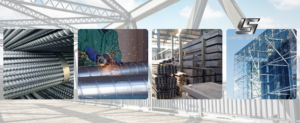
Steel plays a crucial role in many areas of the construction industry. Specifically:
Residential Buildings
Steel is used to make frames (reinforcement for foundations, columns, beams, floors, railings) for residential buildings to ensure the stability and safety of the structure.
Industrial Buildings
In manufacturing plants and workshops, steel is often used as the main structural frame due to its durability and load-bearing capacity.
Transportation Infrastructure
Bridges, roads, railways, tunnels, and ports made of steel can withstand heavy loads and resist harsh weather conditions.
High-Rise Buildings
Apartments, office buildings, and shopping centers with large areas require high load-bearing capacity and aesthetic appeal.
Construction steel cost and influencing factors
Construction steel prices fluctuate depending on the market. According to market information in Australia (April 2026), the price of rebar ranges from 0.55–0.67 USD/kg, while coiled steel is at 0.52–0.60 USD/kg. Contractors should contact suppliers directly to receive the latest price quotes.
Factors affecting the construction steel price
- Raw Material Supply: The prices of iron ore, coking coal, coal, and scrap metal on the international market directly affect steel prices.
- Market Fluctuations: Increased construction demand during the dry season (October-April) often drives up steel prices. When construction demand is high, steel prices usually increase accordingly.
- Transportation Costs: Imported or long-distance steel shipments are more expensive. Additionally, fuel prices and logistics costs affect the final selling price. For example, the current global fuel price situation is strongly impacting the world steel market.
- Brand and Quality: Steel from reputable manufacturers is usually more expensive but guarantees quality.
To ensure transparency, contractors should request detailed quotations, along with warranty policies, from the supplier.
Tips for choosing Construction Steel
To choose the right construction steel, you need to consider the following:
- Check the origin: Choose steel from reputable brands with complete quality certifications.
- Observe the steel surface: Ensure it is free from rust, warping, and has clearly defined ridges (for steel bars).
- Check technical standards: Ensure it meets the Vietnamese, ASTM, and JIS steel standards.
- Compare prices: Avoid choosing excessively cheap steel, as it may affect the quality of the construction.
- Buy the right type of steel: Choose the appropriate type of steel coil, bar, or structural steel depending on the specific project.
Choosing a reputable steel supplier
A reputable steel supplier should meet the following criteria:
- A clear business license
- Provide complete quality certificates meeting TCVN, ASTM, JIS, and AS/NZS standards
- Transparent pricing
- Clear warranty policy
- After-sales service: Support with transportation, technical advice, and prompt complaint handling.
Prioritize choosing a supplier with experience in the industry to ensure accurate advice and good support during construction.
Choose Lintel Steel for Superior Steel Solutions
At Lintel Steel, we offer premium-grade steel solutions for many applications across Perth and Western Australia. With over 11 years of industry experience, we deliver reliable products that meet strict engineering standards.
We also provide expert advice to help you select the best materials for your needs. Our team offers custom sizes, prompt delivery, and free quotes within 48 hours, helping you complete your project with confidence and precision.
Choose Lintel Steel – your trusted partner for galvanized products, strong, and superior steel solutions.
Click here to get a quote and quantity takeoff for free at Lintel Steel.
You can find out more about us at our Fanpage Lintel Steel.


