
How to Reduce the Cost of a Structural Steel Project: How to Optimize Budget Before Building

In the context of fluctuating material and labor costs, reducing construction budgets has become a top priority for industrial investors. However, optimizing costs does not mean compromising quality.
Lintel Steel’s expertise in steel construction services ensures your project is both cost-effective and sustainable. Below, we share practical advice to help you optimize your budget while ensuring long-term safety and operational efficiency.
Why Cost Optimization Matters in Steel Construction
In construction and heavy industry projects, steel costs often account for 50-70% of the total structural budget. Without proper control, costs can escalate rapidly due to fluctuating raw material prices, design flaws, or inefficient construction. Therefore, cost optimization is not simply about “choosing the cheapest option,” but about balancing efficiency, safety, and long-term profitability.
How to Optimize Budget When Building an Industrial?
Optimize Design from the Beginning
The design phase has the greatest impact, accounting for approximately 80% of the project’s total investment cost.
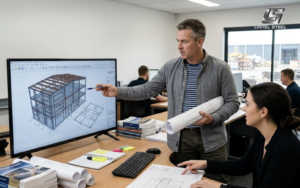
Optimize column spacing and span
Large span, large column spacing → the larger quantity of steel → the larger the steel sections → the higher the cost.
Remember, the wider the structure, the more steel is required to support it – especially in a completely open design.
Therefore, it is necessary to:
- Accurately calculate actual operating requirements.
- Avoid excessively large spans compared to actual needs.
- Choose appropriate column spacing to reduce the weight of the main frame.
- Standardize column spacing, thereby reducing labor expense.
Optimal design can reduce steel consumption by 10–15% per m² compared to designs that overuse steel.
Optimal Design Based on Actual Loads (Instead of Over-Safety)
Project costs are often inflated due to overly cautious design that increases the “feeling of solidity” to the point of excessive safety.
Solution:
- Implement optimization measures to reduce costs while ensuring the safety of steel structures.
- Use modern structural analysis software: Accurately assess load-bearing capacity.
- Optimize structural element cross-sections: Reduce material usage by selecting dimensions based on bending moment diagrams.
- Avoid overuse of large standard cross-sections: Only use cross-sectional dimensions that meet actual load-bearing requirements.
This is a key method for reducing steel building construction costs without compromising structural safety.
Apply Structural Design Software
Technology plays a crucial role in optimizing design costs.
- Early design conflict detection (clash detection)
- Optimizing materials before production
- Cost and performance simulation
Common tools:
- BIM (Building Information Modeling)
- Tekla Structures
- SAP2000 / ETABS
This is a solution to limit changes, avoiding costly demolition or renovation during the construction phase.
Choose the Right Type of Steel
Choosing the right materials and coatings is one of the most important factors affecting the overall cost of a steel structure project. However, “cost-effective” doesn’t mean “cheapest,” but rather an optimal balance between initial cost and long-term performance.
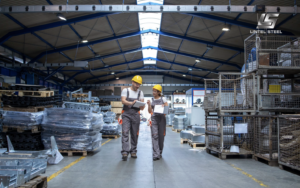
Select Based on Project Needs
Carbon Steel: The most common type in industrial construction due to its reasonable cost and good load-bearing capacity.
Alloy Steel: Offers superior load-bearing capacity compared to regular carbon steel, allowing for the use of less material (reduced structural weight) while maintaining safety.
Galvanized Steel: Coated with a protective layer of zinc, extremely important for projects in harsh environments or high humidity to prevent corrosion.
Stainless Steel: Often used for specialized locations such as food processing plants, pharmaceutical plants, chemical plants, or decorative details requiring aesthetics and longevity due to its self-healing protective coating that provides superior oxidation and corrosion resistance.
Pre-engineered Steel: Designed and fabricated in modules, minimizing errors and saving on-site assembly time.
Choose Cost-Effective Materials and Coatings
Material selection plays a crucial role in cost optimization. Consider the following:
- Alternatives to conventional steel: High-strength steel or recycled steel options can save costs without compromising strength.
- Advanced coatings: Using anti-corrosion coatings can extend the lifespan of steel structures and reduce long-term maintenance costs.
- Local sourcing: Purchasing materials locally can cut down on transportation costs and delivery times.
However, remember that budget optimization isn’t about choosing the cheapest option, but rather the option with the lowest total cost of ownership.
Cost Reduction Through Foundation Optimization
Many investors focus solely on steel structures, while foundations account for approximately 20% of total project budget.
Solution:
- Conduct thorough geotechnical surveys
- Accurately calculate load requirements
- Avoid designing excessively large foundations
- Reducing structural weight also helps reduce foundation costs.
Leveraging Modular Construction and Prefabrication
Modular construction techniques allow structures to be completed in the factory or workshop before being transported to the construction site for assembly. Benefits include:
- Reduced labor costs
- Minimized waste: Prefabrication reduces material waste and increases accuracy.
- Faster project completion time: Construction time is reduced by up to 50% compared to traditional methods. Prefabricated components accelerate the construction process.
- Improved quality control: Production in a controlled environment increases the accuracy and consistency of the structure.
Selecting a Design-Build Contractor
Separating design and construction can lead to:
Deviations between design drawings and actual construction → discrepancies in quantities → increased adjustment costs
A turnkey design and construction model helps:
- Control costs from the conceptual stage, eliminating unforeseen expenses
- Synchronize design and manufacturing
- Minimize the risk of changes
- Shorten the bidding process
Criteria for Choosing the Right Partner
To ensure budget optimization, evaluate contractors based on:
- In-house Fabrication: Prioritize contractors with their own steel manufacturing plant → reduced costs and better control over timelines without intermediaries.
- Experience in similar projects: to assess professionalism in handling steel structures.
- Transparency in quotations: A reputable contractor will provide a detailed and clear Bill of Quantities (BOQ) for each item, rather than a vague, general figure.
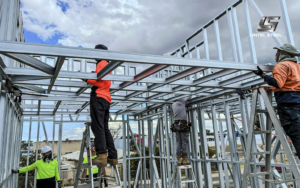
Accurate Budgeting and Variation Control
An accurate budget is not a fixed number, but rather an adaptable financial plan.
Unexpected additional costs often arise from:
- Mid-project design changes
- Additional work outside the scope of the contract
- Incomplete initial survey
- Price fluctuations in the market
To mitigate risks:
- Finalize the design before construction begins
- Clearly define the scope of work
- Allocate a reasonable contingency budget (3–5%)
- Monitor costs in real time
Key Factors Affecting Steel Construction Costs
Material unit prices are based on fluctuations in steel market prices
- Location (distance from city center, coastal area, etc.) and geological conditions (soil foundation)
- Structure area and span
- Construction time and project schedule
- Crane load capacity
- Insulation material requirements
- Other costs (fabrication, transportation, maintenance, etc.)
Conclusion
Reducing steel structure construction costs does not mean cutting materials or lowering technical standards. Effective solutions lie in:
- Optimal design from the outset
- Choosing the right type of steel for the project
- Collaborating with experienced contractors
- Closely monitoring progress and changes
A smart investment strategy allows businesses and individuals to save budget, shorten timelines, and ensure long-term stable operation.
If you are looking for consultation, design support, or cost estimation for the fabrication and installation of steel structures for your factory project, please contact us below to receive the best solution.
Steel Structure Fabrication in Perth – Lintel Steel
At Lintel Steel, we have been a trusted steel structure fabricator in Perth for more than 11 years, delivering high-quality fabricated steel for residential, commercial, and industrial projects. Our team specializes in custom steel frames, structural beams, columns, and trusses, all manufactured to Australian Standards.
From design and fabrication to installation, we provide end-to-end steel solutions built for strength, accuracy, and reliability. We also offer free, no-obligation quotes within 48 hours to help you start your project with confidence and efficiency.
Choose Lintel Steel – where precision meets performance in every structure we build.
Click here to get a quote and quantity takeoff for free.
You can find out more about us at our Fanpage Lintel Steel.


