
Steel Standards: 5 Simple Ways to Check Construction Steel Quality

Steel forms the backbone of modern construction, from towering skyscrapers to sturdy bridges. But not all steel is created equal – poor construction steel quality can lead to catastrophic failures, skyrocketing repair costs, and safety risks.
Understanding steel standards is essential before any purchase, as they guarantee consistency, strength, and reliability. This guide on Lintel Steel will dive deep into steel standards, explore how to check steel quality effectively, and offer practical tips for steel construction projects.
Whether you’re a contractor, engineer, or buyer, you’ll learn the key criteria, common standards, and step-by-step checks to ensure top-tier construction steel quality.
What are steel standards?
International and national organizations develop steel standards to ensure consistency and reliability. Steel standards are a set of specifications defining the composition, properties, methods, processes, and performance requirements of steel products. These standards ensure that each batch meets minimum requirements for safety, performance, and compatibility in construction. Thus, promoting consistency among manufacturers worldwide, steel products will have the same materials and construction across different businesses.
While production lines may differ across factories, they must still adhere to national standards. Construction steel standards vary from country to country.
Criteria for Classifying Steel
Steel standards classify materials based on several criteria, directly impacting their suitability for steel construction. These help buyers select the right type for specific loads and e
Chemical composition:
- Carbon steel (high carbon content for increased strength)
- Alloy steel (with added elements such as chromium for increased toughness)
- Stainless steel (corrosion resistance).
By purpose:
- Structural steel (construction steel and steel used in machine manufacturing) requires high strength and toughness.
- Tool steel is used to manufacture tools such as measuring instruments, stamping dies, cutting tools, etc., requiring high hardness, load-bearing capacity, and wear resistance.
Manufacturing process:
- Hot rolling (affordable, used for structural beams)
- Cold rolling (precision, used for plates).
Shape and form:
- Rebar (reinforcing bars)
- Structural beams (I-beams, H-beams)
- Steel pipes and tubes
- Sheets and plates
These factors determine performance. For example, high-strength reinforcing steel bars in high-rise building construction withstand greater stresses, extending their lifespan and reducing maintenance costs.
The role of steel standards in construction
Steel standards underpin every successful steel construction project by ensuring reliability from foundation to finish.
Quality Assurance and Consistency
Construction projects, bridges, and steel structures can only be durable when materials meet standards. Adherence to standards ensures steel’s load-bearing capacity, rust resistance, and reduced risk of fracture during use.
Unity in Production and Trade
Steel standards create a common language between manufacturers, contractors, and customers. Whether in domestic or international markets, the application of ASTM, JIS, EN, DIN, AS/NZS, or TCVN standards facilitates a clear understanding of product characteristics and minimizes transaction errors.
Cost Efficiency
Steel standards reduce waste, minimize errors, and lower long-term costs by reducing repair expenses; a study by ResearchGate showed that standard-compliant steel reduces lifecycle costs by up to 20%.
Material Compatibility
Standards ensure that different steel components work together seamlessly within a structure. It enhances material compatibility, allowing the reinforcing steel to bond seamlessly with the concrete.
Common steel standards
Different regions and industries use different steel standards. Here are some of the most common ones:
ASTM Standards
ASTM (American Society for Testing and Materials) standards were established in 1898 and are headquartered in West Conshohocken, Pennsylvania.
ASTM is an internationally recognized standard used to reference output quality before products are released to the market; however, it does not mandate that manufacturers comply with its standards. Currently, there are 12,575 active ASTM standards worldwide.
Some common ASTM steel standards
- ASTM A53 standard for welded steel pipes, seamless steel pipes, and galvanized steel pipes.
- ASTM A106 standard for seamless steel pipes in industries such as oil and gas, chemicals, construction, and industrial machinery.
- ASTM A615 standard for ribbed and smooth steel bars, commonly used for reinforcing concrete in construction projects.
- ASTM A36 standard for multi-purpose structural steel, used in prefabricated building structures, bridges, roads, and machinery fabrication.
- AISI standards (Stainless Steel): These standards are specifically used for common types of stainless steel: 304, 316, 201, and 430.
JIS Standards
Japanese Industrial Standards (JIS) are standards aimed at unifying technical regulations, testing methods, and ensuring the quality and reliability of goods. Products conforming to JIS standards are highly regarded for their quality and safety.
Some common JIS steel standards
- JIS G3101:2015 (SS400 for general use) standard for thickness, yield strength, and tensile strength of hot-rolled carbon steel plates and sections (U, I, V, H)
- JIS G3112:2010 determining dimensions, weight, and rib limits for ribbed steel bars
- JIS G3312:2012 standard specifying the quality, strength, paint adhesion, and corrosion resistance of hot-dip galvanized steel (galvanized steel coils)
ISO Standards
ISO standards are a system of international rules (issued by the International Organization for Standardization – ISO) aimed at standardizing production, business, and management processes, helping businesses improve product quality, optimize performance, and enhance global brand reputation. Founded in 1947, it is headquartered in Geneva, Switzerland.
Some common ISO steel standards
- ISO 630 Structural steels with defined mechanical properties

European standards (EN, BS)
The EN (European Norm) standard is a European standard system that specifies the technical requirements, chemical composition, mechanical properties, and tolerances for various types of steel, ensuring consistent quality in manufacturing and construction.
Some common EN steel standards
- EN 10025 is the most important standard for hot-rolled structural steel. It includes technical requirements for steel plates and sections (I, U, V, H) widely used in factory and bridge construction.
- EN 10210 (Hot finished) & EN 10219 (Cold formed) structural steel tubes (square, rectangular, round) are widely used in steel structures.
- EN 10083 describes mechanically manufactured steel, alloy steel, that is quenched and tempered to achieve high strength.
- EN 10149 describes high-strength, hot-rolled steel plates with good cold-forming capabilities.
- EN 10204 specifies the types of inspection certificates required to certify the quality of imported or domestically produced steel shipments.

BS stands for British Standards, researched, developed, and published by the British Standards Institute (BSI). Currently, over 31,000 standards are applied across fields such as construction, industry, electronics, healthcare, and other management systems.
Some common BS steel standards
- BS 4449 standard specifies ribbed and smooth round steel bars to ensure load-bearing capacity, strength, and ductility for concrete structures.
- BS 5950 for steel structures in construction.
- BS EN 1090 standard specifies steel and aluminum components, from design and fabrication to installation.
- BS 1387 for steel pipes, mainly welded steel pipes used for water, gas, and electrical piping systems.
- BS 970 for alloy and carbon steels.
AS/NZS Domestic Standards
A common technical standards system applied by Australia and New Zealand, specifying stringent requirements for quality, safety, and performance of products and services.
AS 1163 and AS/NZS 1163 are two important standards for steel pipe products. These standards mainly define the design and quality requirements for structural steel pipes, ensuring the safety, durability, and suitability of the pipes.
Applications of steel standards in practice
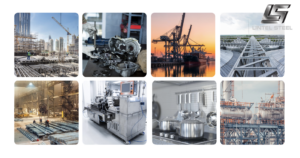
Steel standards are not only technical regulations but also an important basis for material selection in many different fields. Thanks to these standards, steel is used in a wide range of applications, ensuring quality and safety for each industry.
Example: Commercial towers rely on EN 10025 for wind resistance. In infrastructure like an expressway, ASTM A615 ensures bridge durability.
Construction Industry
- Structural steel (H, I, U, V) and reinforcing steel must comply with ASTM and JIS standards to ensure load-bearing capacity.
- Applications in high-rise buildings, bridges, and prefabricated steel structures.
These applications highlight the versatility of steel, but to fully understand its properties and uses, check out our detailed guide on Construction Steel: Types, Advantages, and Applications
Mechanical Engineering
- Standard alloy and carbon steel are used in the manufacture of machinery and precision machine parts.
Shipbuilding, Oil & Gas, and Energy Industries
- Thick steel plates and alloy steel meeting ASTM and EN standards are used in ship hulls, drilling rigs, oil pipelines, and boilers.
- High requirements for corrosion resistance and pressure resistance.
Equipment, Household, and Medical Equipment Manufacturing
- Stainless steel 304 and 316, meeting international standards, are used in food processing, healthcare, and household appliances.
- Advantages: rust-resistant, durable, aesthetically pleasing, and safe for health.
Tips for Choosing Standard-Compliant Steel
Selecting steel that meets the correct standards is crucial to ensuring the quality and safety of construction projects and equipment, avoiding the risk of poor construction results. Below are some important tips.
Determine the intended use
- If used for construction, prioritize structural steel and reinforcing steel according to TCVN, ASTM, and JIS standards.
- If used in corrosive environments (food, medical, chemical, housing), choose 304 or 316 stainless steel that meets international standards.
Check quality certificates (CO, CQ)
- CO (Certificate of Origin): Certificate of origin of goods.
- CQ (Certificate of Quality): Certificate that the product meets quality standards. This is important evidence to ensure the steel meets the published steel standards.
Surface Inspection
Check for:
- Visually scan for red flags.
- Quality steel shows no rust, cracks, laminations, or deformations. Dimensions should be uniform; uneven rebar signals poor rolling.
- A quick magnet test checks for non-magnetic fakes (true steel is magnetic).
Choosing a reputable supplier
- Prioritize companies with experience and a strong brand in the steel industry.
- Ensure they have a clear inspection system and test reports.
Seeking expert advice
- For important projects, consult with engineers and materials experts to select the appropriate type of steel.
- Avoid using substandard or unverified steel as it poses many risks.
Choose Lintel Steel for Superior Steel Solutions
At Lintel Steel, we offer premium-grade steel solutions for many applications across Perth and Western Australia. With over 11 years of industry experience, we deliver reliable products that meet strict engineering standards.
We also provide expert advice to help you select the best materials for your needs. Our team offers custom sizes, prompt delivery, and free quotes within 48 hours, helping you complete your project with confidence and precision.
Choose Lintel Steel – your trusted partner for galvanized products, strong, and superior steel solutions.
Click here to get a quote and quantity takeoff for free at Lintel Steel.
You can find out more about us at our Fanpage Lintel Steel.


