
What Are Parallel Flange Channels (PFC) Used For?

If you’ve ever walked past a construction site, you’ve probably seen them: long, C-shaped steel bars lifted into position or bolted into concrete foundations. That’s C-shaped steel, commonly known as PFC or C-shaped steel, and it’s one of the most versatile and widely used structural steels in the world.
But what exactly are they used for? Let’s explore the many applications of this essential construction component with Lintel Steel.
What Are Parallel Flange Channels?
A Parallel Flange Channel is a type of structural steel beam with a cross-section that resembles the letter “C”. It consists of a vertical “web” with two horizontal “flanges” at the top and bottom, both extending outward in the same direction. What sets PFCs apart from traditional channel sections is that their flanges are perfectly parallel to each other – unlike older taper flange channels, which narrow toward the ends.
This seemingly simple design difference gives PFCs significant advantages in construction, making them the preferred choice for countless structural applications
New to PFC steel? Explore our What Is a Parallel Flange Channel (PFC)? A Complete Guide for a detailed breakdown of its design, benefits, and uses in construction.
Why Choose Parallel Flange Channels?
Before exploring their uses, it’s worth understanding why PFCs are so popular:
Easier Connections: Because the flanges are flat and parallel, you can use standard flat washers when bolting connections, eliminating the need for special tapered washers required by older channel types. Welding is also simpler and requires no special pre-heating.
Greater Strength: PFCs offer up to 20% more strength for their weight compared to traditional channels, providing an excellent strength-to-weight ratio.
Consistent Dimensions: The parallel flanges provide a flat, uniform surface for mounting against other materials – a critical feature when the channel needs to sit flush against a wall, concrete slab, or timber frame.
Available in a wide range of sizes and grades, PFCs can be adapted to projects ranging from light residential framing to heavy industrial infrastructure
Common Uses of Parallel Flange Channels
1. Building Construction
PFCs are the backbone of modern construction. They serve as:
- Primary and secondary support beams in structural frameworks carry loads from floors, roofs, and walls.
- Columns in smaller structures or as supplementary supports where full universal columns would be overkill.
- Floor joist supports provide reliable bearing for flooring systems in both residential and commercial buildings.
- Roof structures, acting as purlins or edge beams that support roofing materials.
- Lintels above doors and windows carry the weight of masonry above the opening.
In residential construction, PFCs are particularly popular because their dimensions integrate easily with standard stud framing. They’re used as horizontal steel supports for alfresco roofs, edge beams, and bearers that sit flush against concrete slabs or timber walls.
2. Infrastructure & Civil Engineering
Beyond individual buildings, PFCs play a vital role in larger infrastructure projects:
Bridges: PFCs provide reinforced support for bridge decks, walkways, and load-bearing structures. They’re also used in bridge trusses and to support barriers and drainage systems.
Mining infrastructure: The mining industry relies on PFCs for structural support in demanding, heavy-duty environments.
Storage facilities: From warehouses to transport hubs, PFCs provide the structural framework.
Their strength-to-weight ratio makes them suitable for infrastructure applications where durability is essential.
3. Industrial & Manufacturing Applications
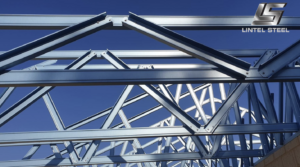
The industrial sector makes extensive use of PFCs for:
Machinery frames and equipment supports: Their high load-bearing capacity makes them ideal for supporting heavy industrial equipment.
Manufacturing plant structures: PFCs form the skeletons of factories and production facilities.
Conveyor frameworks and skids: The open-side design of PFCs integrates well into conveyor systems and equipment bases.
Industrial shelving and storage systems: Their strength and adaptability make them perfect for heavy-duty racking
4. Vehicle & Transport Applications
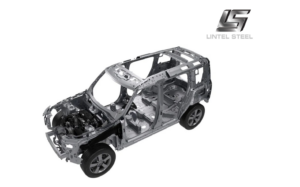
PFCs aren’t just for stationary structures – they’re also found in:
Vehicle and trailer frames: The C-shape provides strength while keeping weight manageable.
Bus body construction: PFCs form the structural skeleton of many commercial vehicles.
EOT crane structures: Overhead traveling cranes rely on PFCs for their gantry and support systems.
Their ability to withstand dynamic loads makes them ideal for transportation-related applications.
5. Specialized Structural Uses
Parallel Flange Channels also shine in more niche applications:
Mezzanine floors: Their flat, parallel flanges provide straightforward surfaces for bolting or welding to other steel sections, making them ideal for supporting elevated floors.
Wall framing and studs: The open-side design makes PFCs highly effective in wall systems, where they act as vertical studs or horizontal bracing.
Portal frames: PFCs are used alongside universal beams and columns to create the rigid frames common in warehouses and industrial buildings.
Back-to-back configurations: Two PFCs can be welded together back-to-back to form a non-standard I-beam for specialized applications
Lintels Above Openings: frequently used as lintels above doors, windows, and large openings. They distribute the load from the structure above and transfer it safely to the surrounding walls.
Benefits of using Parallel Flange Channels
Superior Structural Performance
Higher Load-Bearing Capacity: PFCs offer up to 20% more strength than traditional tapered flange channels of the same weight. The parallel design allows for a more uniform distribution of stress across the section.
Excellent Strength-to-Weight Ratio: You get significantly more structural capacity without adding excessive dead weight to the building. This allows engineers to design lighter, more efficient structures.
Consistent Flange Thickness: Unlike tapered channels, where the flange gets thinner towards the edge, PFCs have a uniform thickness from root to toe. This makes calculating structural loads and stress points much more predictable and accurate.
Faster and Easier Fabrication & Installation
Simpler Bolted Connections: This is arguably the biggest practical advantage. Because the inner and outer flange surfaces are perfectly flat, you can use standard flat washers for bolting. With traditional tapered channels, you must use expensive, hard-to-source tapered washers to compensate for the slope. PFCs eliminate this hassle.
Easier Welding: The uniform thickness of the flanges means there is no need for special pre-heating during welding. This saves time, reduces energy costs, and simplifies the fabricator’s workflow.
Cleaner Joints: The flat surfaces allow PFCs to sit flush against concrete slabs, timber frames, and other steel members, creating cleaner, tighter connections without awkward gaps.
Significant Cost and Time Savings
Reduced Labour Costs: Faster bolting and welding translate directly into lower labor hours on-site. There is no need to sort or manage specialized tapered washers, streamlining the entire assembly process.
Lower Material Costs: While the steel itself may cost slightly more per ton, the improved strength-to-weight ratio often means you can use a smaller, lighter PFC section to achieve the same load capacity as a heavier tapered channel—ultimately reducing the total tonnage of steel required.
Minimal Waste: Suppliers typically offer precision cutting services for PFCs. You can order them cut to exact specifications, significantly reducing on-site scrap and material waste.
Enhanced Durability and Longevity
Excellent Resistance to Bending and Shear: The geometric shape of PFCs provides outstanding resistance against lateral torsional buckling, making them highly reliable for high-stress applications like bridge decks and heavy machinery supports.
Corrosion Protection Options: For harsh environments, PFCs can be readily supplied with protective coatings, such as hot-dip galvanizing, to ensure a long, maintenance-free service life.
Robust Performance: They are manufactured from high-quality structural steel grades, ensuring they can withstand heavy impact, vibration, and dynamic loads without deforming.
Flexibility and Sustainability
Wide Range of Sizes: PFCs are available in a broad spectrum of dimensions and thicknesses, making them suitable for everything from light residential framing to heavy industrial infrastructure.
Material Versatility: Beyond standard mild steel (which is easy to machine and weld), PFCs can also be manufactured from stainless steel for projects requiring superior corrosion resistance, such as in food processing or marine environments.
Easy to Modify: On-site modifications—such as cutting, drilling, and notching—are straightforward, offering excellent adaptability if design changes occur mid-project.
100% Recyclable: Like all structural steel, PFCs are infinitely recyclable without losing their mechanical properties, making them an environmentally friendly choice aligned with green building standards.
Key Considerations When Using PFCs
Although PFCs provide immense versatility, structural engineers and construction professionals must account for specific technical factors:
Directional Strength: In contrast to symmetrical I-beams, these channels deliver structural integrity mainly along a single axis. They are frequently selected for projects where the vertical web must be seamlessly integrated within a wall or framework.
Torsional Effects: When a uniform load is distributed across the top flange, the section may exhibit a tendency to twist away from its web. While manageable, this characteristic requires careful consideration during the initial design phase.
Mounting Orientation: These sections perform exceptionally well when the flat external surface of the web is positioned flush against a secondary material, ensuring a maximized contact area.
Choose Lintel Steel for Superior Steel Solutions
Lintel Steel Parallel Flange Channels (PFCs) are high-strength structural steel sections with a U-shaped profile and parallel flanges. Engineered for superior load distribution and structural stability, PFCs are widely used in construction, engineering, and industrial applications. Their parallel flange design allows for easy connection and bolting, making them a preferred choice for heavy-duty frameworks and load-bearing structures.
At Lintel Steel, we offer premium-grade steel solutions for a wide range of applications across Perth and Western Australia. With over 11 years of industry experience, we deliver reliable products that meet strict engineering standards.
We also provide expert advice to help you select the best materials for your needs. Our team offers custom sizes, prompt delivery, and free quotes within 48 hours, helping you complete your project with confidence and precision.
Choose Lintel Steel – your trusted partner for galvanized products, strong and superior steel solutions.
Click here to get a quote and quantity takeoff for free at Lintel Steel.
You can find out more about us at our Fanpage Lintel Steel.


