Steel Girder: Design, Manufacturing & 5 Ways to Maintain
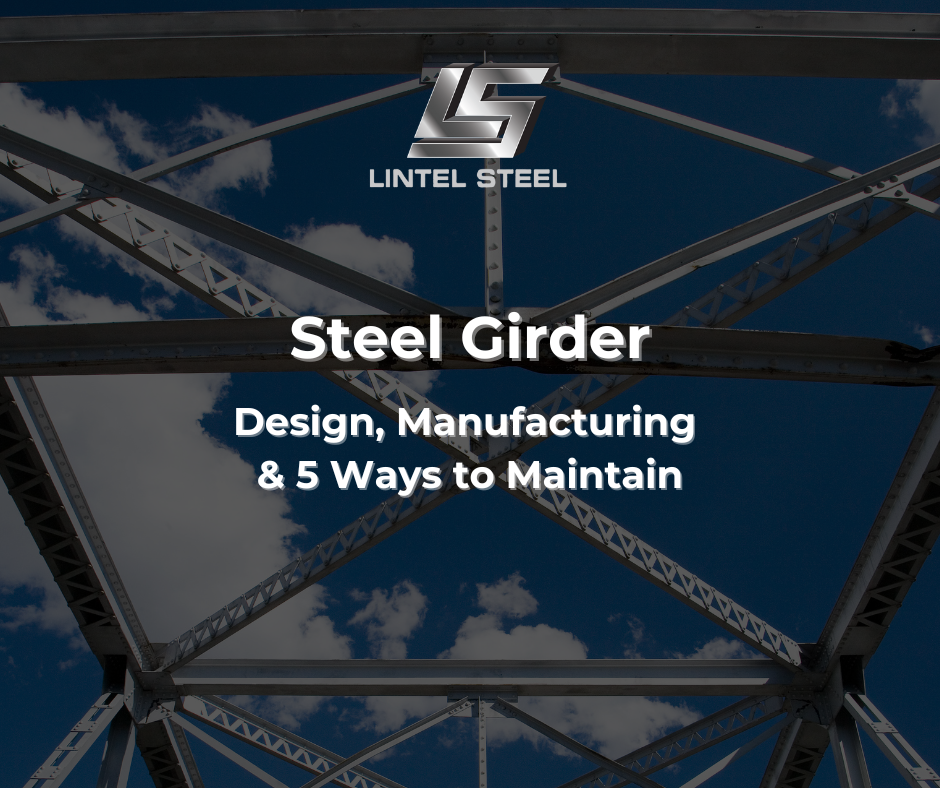
In construction and infrastructure projects, steel girders support heavy loads and ensure long-term structural stability. Whether used in bridges, high-rise buildings, or industrial facilities, a steel girder acts as the main horizontal support beam, distributing weight evenly across columns or piers. Their superior strength-to-weight ratio, durability, and versatility make them a cornerstone in both civil and structural engineering.
What Is a Steel Girder?
A steel girder is a large beam made primarily from hot-rolled structural steel, designed to carry and transfer loads from the structure above to the supports below. It is usually an I-beam, H-beam, or box-section type, depending on the design requirements.
The term “girder” generally refers to major horizontal members that support smaller beams or joists. In bridges, for example, the girders bear the deck load and distribute it to the abutments or piers; in buildings, they serve as the main frame members that support floors and roofs.
Common girder types include:
- Plate Girders: Built by welding or bolting steel plates to form a deep section for long spans.
- Box Girders: Enclosed rectangular or trapezoidal sections used for heavy bridge and highway structures.
- I-Girders or Universal Beams: Standard rolled sections used in buildings and industrial frames.
Steel Girder Design and Manufacturing
The design and manufacturing of a steel girder require precise engineering to ensure that it performs efficiently under heavy loads and dynamic stresses. A girder must carry not only its own weight but also the loads from slabs, beams, and other structural components. Because of this, the design process focuses heavily on bending resistance, shear strength, lateral stability, and deflection control.
Structural Design Principles
Engineers design steel girders based on analytical calculations and computer simulations to predict how the structure will behave under various load conditions. Parameters such as bending moments, shear forces, and torsional stresses are evaluated using methods like Finite Element Analysis (FEA) or by applying formulas from recognized design codes such as:
- AS/NZS 5100 – Bridge Design
- AISC 360 – Specification for Structural Steel Buildings
- EN 1993-1-1 – Eurocode 3: Design of Steel Structures
The design process begins with determining the span length and load type (dead, live, wind, seismic, or impact loads). From there, engineers select the girder profile — I-beam, H-beam, plate girder, or box girder — that offers the most efficient load distribution and stiffness.
Key Design Parameters
Each steel girder is defined by a set of geometric and material properties that influence its performance:
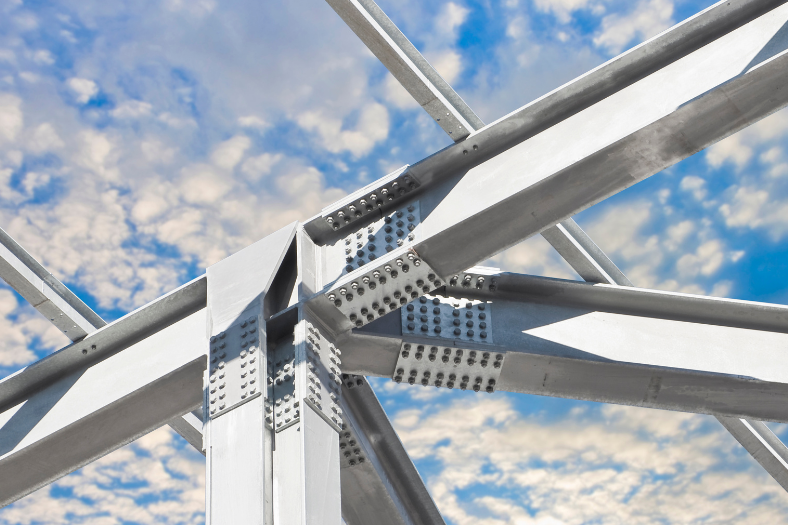
- Depth (Web Height): Determines bending resistance; deeper sections can carry greater loads over long spans.
- Flange Width and Thickness: Resist bending and provide stability; thicker flanges prevent local buckling.
- Web Thickness: Carries shear loads; reinforced with stiffeners in high-shear regions.
- Span Length: Longer spans typically require plate girders or composite sections.
- Steel Grade: Higher-strength steels (e.g., 350 MPa or 450 MPa) allow thinner sections with the same capacity.
- Deflection Limit: Controlled to prevent structural vibration or cracking in the superstructure above.
Deflection limits are particularly important in bridges or floors, where excessive movement can cause serviceability problems even if the girder remains structurally sound.
Connection and Stability Design
Connections are designed to transfer forces efficiently between girders, columns, and secondary beams.
- Bolted connections are preferred for field assembly due to speed and ease of inspection.
- Welded connections provide continuous load paths and high rigidity, often used in shop fabrication.
- Bearing stiffeners and end plates are installed at load points to prevent web crippling or local buckling.
Lateral-torsional buckling is another critical design concern. To control it, designers may include bracing systems, lateral restraints, or composite decking, depending on whether the girder supports a bridge deck, roof, or floor system.
Fabrication Process
Once the design is finalized, the steel girder manufacturing process begins in a controlled fabrication facility. The main steps include:
- Material Preparation: High-quality steel plates or rolled sections are selected according to the required grade and specifications.
- Cutting and Shaping: Using CNC plasma, oxy-fuel, or laser cutting machines to ensure dimensional accuracy.
- Assembly and Welding: Flanges and webs are assembled using automatic or robotic welding systems to achieve deep penetration and uniform welds.
- Drilling and Machining: Bolt holes and connection plates are drilled or milled to tight tolerances for precise fit-up during installation.
- Heat Straightening and Alignment: Large girders may undergo controlled heating to correct minor distortions caused by welding.
- Surface Preparation and Coating: The girder is shot-blasted, primed, or galvanised to enhance corrosion resistance.
Quality Control and Testing
Every steel girder undergoes rigorous quality assurance before delivery. This includes:
- Dimensional inspection to verify tolerances against fabrication drawings.
- Non-destructive testing (NDT) such as ultrasonic or magnetic particle testing to detect internal flaws.
- Weld integrity testing to ensure full penetration and uniform strength.
- Load and deflection testing for large custom girders, verifying design compliance.
All fabrication is typically carried out under certified systems such as ISO 9001, AS/NZS 1554, or AISC Certified Fabricator standards. This ensures the final product meets both engineering specifications and safety requirements.
Modern Fabrication Technology
Modern steel fabrication has advanced beyond manual assembly. Facilities now employ automated robotic welding, precision laser measurement, and digital fabrication management software to streamline production, reduce human error, and enhance traceability. These technologies not only improve product consistency but also enable faster project delivery and cost efficiency — critical factors in large-scale infrastructure and industrial construction.
Advantages of Using Steel Girders
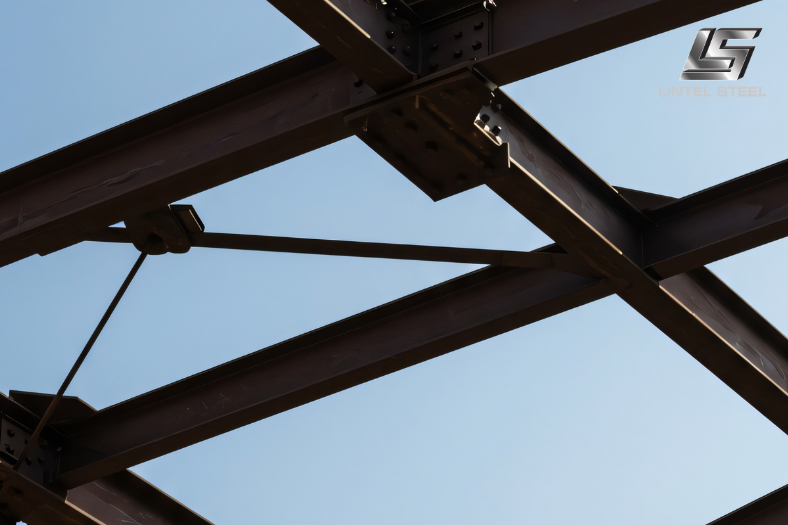
The popularity of steel girders comes from their outstanding performance and adaptability.
- High Strength-to-Weight Ratio: Provides exceptional load-bearing capacity while keeping structures lighter.
- Design Flexibility: Can be fabricated into custom sizes and shapes to meet specific project requirements.
- Durability: Resistant to fatigue, corrosion (with coating or galvanising), and environmental impacts.
- Ease of Installation: Prefabricated girders reduce on-site labour and construction time.
- Sustainability: Steel is 100% recyclable, supporting sustainable building practices and lifecycle efficiency.
These advantages make steel girders ideal for both long-span bridges and complex architectural designs where strength and aesthetic precision must coexist.
Applications of Steel Girders
Steel girders are used across multiple industries and structural systems, including:
- Bridges and Overpasses: Carry traffic loads and resist dynamic forces.
- Commercial and Industrial Buildings: Form the main frame of floors, roofs, and mezzanines.
- High-Rise Towers: Provide primary load paths to foundations.
- Craneways and Manufacturing Plants: Support moving loads and heavy equipment.
- Infrastructure Projects: Railways, tunnels, and energy facilities.
Each application demands strict adherence to fabrication standards and on-site erection tolerances to ensure performance and safety.
Maintenance and Inspection
Even though steel girders are engineered to carry immense loads and endure decades of service, regular maintenance and structural inspection are critical to prevent long-term deterioration. Proper upkeep not only ensures safety but also minimizes lifecycle costs by preventing early failure or costly replacements.
1. Protective Coatings and Corrosion Control
Steel girders exposed to the atmosphere, humidity, or industrial environments are prone to corrosion. To counter this, they are commonly treated with protective systems such as:
- Hot-dip galvanizing for long-term corrosion resistance in outdoor conditions.
- Epoxy or polyurethane coatings that serve as a chemical barrier against moisture and pollutants.
- Cathodic protection systems in bridge or marine applications where exposure to saltwater accelerates corrosion.
- Periodic inspection and reapplication of coatings are essential to sustain performance and maintain the structural integrity of the girder.
2. Load Monitoring and Structural Health Sensors
Modern construction increasingly uses real-time structural monitoring systems. Strain gauges, displacement sensors, and accelerometers can detect early signs of overstressing or deformation.
These data-driven insights help engineers assess whether the girders are functioning within design parameters, enabling predictive maintenance before any damage propagates.
3. Weld and Connection Integrity Checks
Since girders rely heavily on welded or bolted connections, fatigue cracks can develop over time, particularly in high-stress regions such as web-flange junctions or at points of concentrated load.
Regular non-destructive testing (NDT) — including ultrasonic testing, magnetic particle inspection, and radiography — ensures that defects are identified early. Bolts should also be torque-checked periodically to prevent loosening under vibration or load cycling.
4. Alignment and Deflection Monitoring
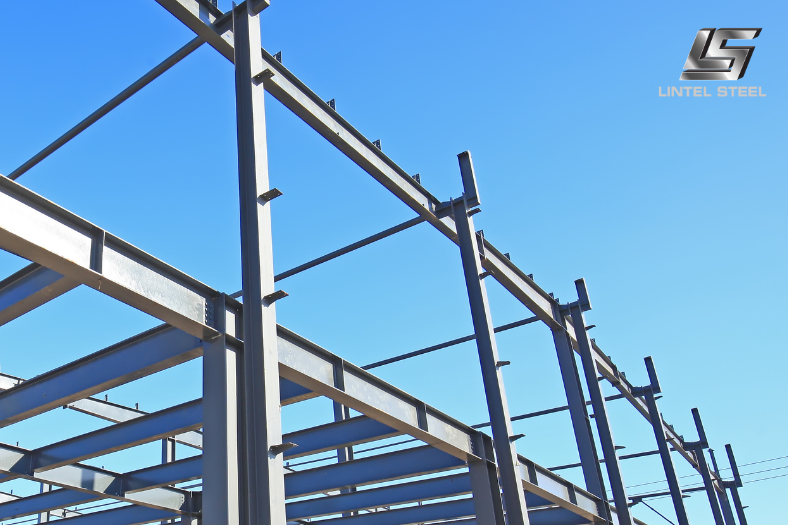
Misalignment or excessive deflection may indicate uneven load distribution or foundation movement. Laser scanning and total-station surveys can precisely measure these deformations, ensuring that corrective actions — such as load redistribution or bearing replacement — can be implemented promptly.
5. Lifecycle and Sustainability Considerations
A well-maintained steel girder can last 50 to 100 years depending on the environment and design standards. Recycling of steel components also supports sustainable construction practices by reducing embodied carbon and material waste.
Steel Girder Fabrication in Perth
At Lintel Steel, we specialise in custom steel girder fabrication and supply for commercial, industrial, and infrastructure projects across Perth. With over 11 years of experience, our in-house team combines advanced equipment, precision engineering, and local expertise to deliver girders that meet Australian Standards and project specifications.
We provide:
- Custom-cut plate girders and universal beams
- Certified welding and surface finishing
- On-site delivery and installation support
- Free quotations within 48 hours
Rewind
A steel girder is more than just a component — it’s the main structural element that determines a project’s strength, stability, and lifespan. By choosing the right girder type, design, and fabrication partner, engineers can ensure safe, efficient, and sustainable results.
If you’re planning a new construction or bridge project in Perth, contact Lintel Steel today to discuss your steel girder requirements and get a free expert consultation.
Click here to get a quote and quantity takeoff for free.
You can find out more about us at our Fanpage Lintel Steel.