
Steel Sections: A Complete Guide for DIY Builders and Fabricators
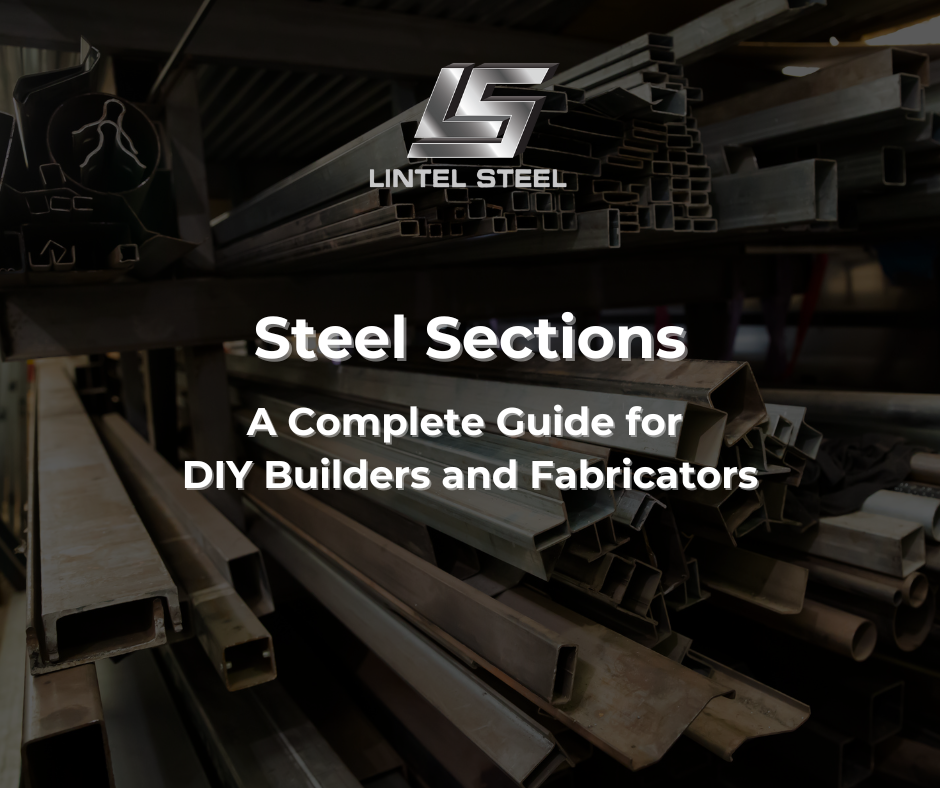
If you’re planning a project around the house, building a small structure, or working on a fabrication job, you’ll almost always need steel sections. These are the standard shapes of steel—like beams, channels, angles, and hollow tubes—that you can cut, weld, and assemble to build strong and reliable frames.
Whether you’re making a shed, a gate, a trailer, or a workshop project, understanding the different types of steel sections helps you choose the right pieces, avoid mistakes, and make your build safer and easier. This guide explains the most common steel sections, what they’re used for, and how to pick the right size for your job.
What Are Steel Sections?
Steel sections are pre-formed steel shapes used in construction, engineering, and general fabrication. Each section is designed to handle different types of loads and structural needs. These shapes are created through hot-rolling, cold-forming, or welding processes, and they come in many sizes, thicknesses, and grades to suit various applications.
Whether you’re building a house, a warehouse, a bridge, or a piece of machinery, choosing the right steel section is essential for strength, safety, and long-term performance.
Why Steel Sections Are Important
Steel sections form the backbone of most modern structures because they offer:
- High strength-to-weight ratio
- Excellent load-bearing capabilities
- Long-term durability and corrosion resistance (with proper coating)
- Easy fabrication, cutting, and welding
- Predictable and reliable structural performance
They allow builders and engineers to create strong, lightweight, and cost-effective designs with minimal waste.
Common Types of Steel Sections (Explained Simply)
There are many different steel sections, each designed to handle specific loads, shapes, and building requirements. Understanding these sections helps you choose the right piece for your project and ensures the structure performs safely and efficiently. Below are the most widely used steel sections in modern construction and fabrication, each explained simply but with good technical detail.
1. Universal Beams (UB) – I-Beams
Universal Beams, also called I-beams or H-beams, are one of the most important steel sections in structural engineering.
- The tall “web” gives strength against bending.
- The wide “flanges” help spread loads safely.
Where they are used:
- Main building frames
- Floor beams
- Roof structures
- Warehouse frames
- Industrial buildings
They are chosen for projects that need long spans, high strength, and good stability.
2. Universal Columns (UC)
Universal Columns are similar to UBs, but with almost equal flange and web dimensions. This gives them excellent vertical load capacity. They are strong in compression and do not buckle easily.
Where they are used:
- Building columns
- Lift shafts
- Vertical supports
- Heavy load-bearing structures
UCs are the preferred choice when the main load is straight downwards, such as in columns and pillars.
3. PFC / C-Channels (Parallel Flange Channels)
A C-shaped section with a single web and two flanges.
- Lighter than beams
- Easier to install
- Good for bracing and framing
Typical applications:
- Lintels over openings
- Roof and wall framing
- Stair stringers
- Bracing members
- Light industrial structures
PFCs are often used together with UBs and UCs to complete a strong and stable frame.
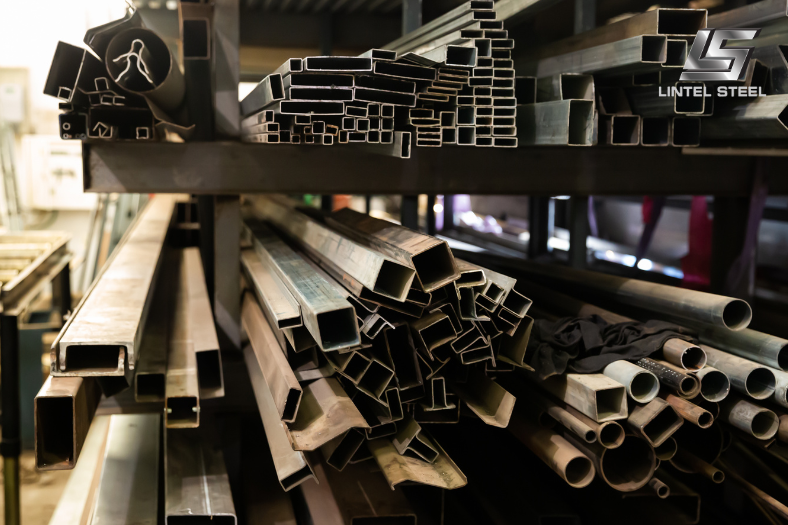
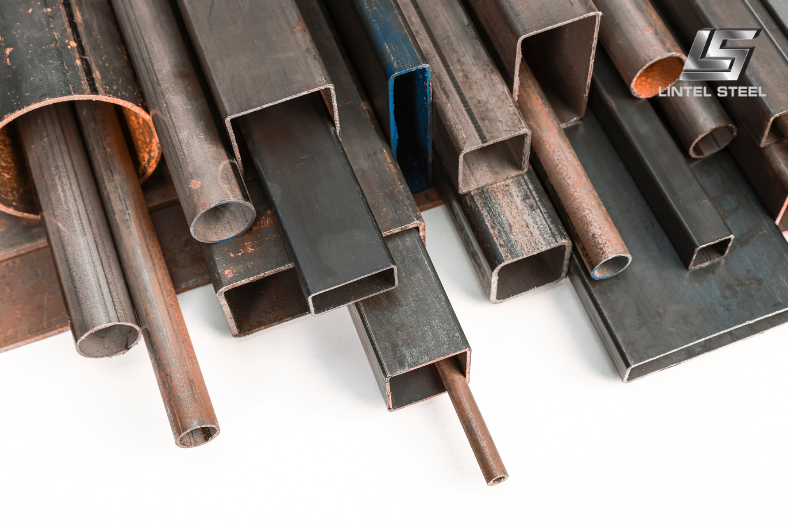
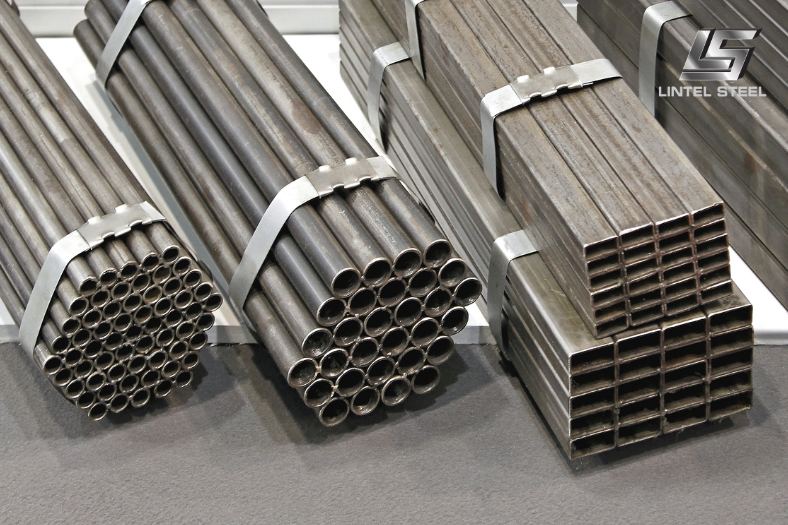
4. RHS and SHS (Rectangular and Square Hollow Sections)
These are hollow steel tubes with flat sides. They provide excellent torsion (twisting) strength and have a clean, modern appearance.
Advantages:
- Strong in all directions
- Easy to weld
- Good for architectural designs
- Look clean and professional
Used for:
- Structural frames
- Mezzanines
- Handrails and balustrades
- Furniture frames
- Sign posts
- Machinery supports
SHS (square) is balanced and symmetrical, while RHS (rectangular) offers different strengths in vertical vs horizontal directions.
5. CHS (Circular Hollow Sections)
CHS are round pipes used for both structural and non-structural purposes.
Their round shape gives even strength all around, making them excellent for resisting bending and pressure.
Common uses:
- Architectural columns
- Pipelines and fluid systems
- Trusses
- Structural braces
- Balustrades and railings
CHS is popular in designs where appearance and smooth lines are important.
6. Steel Angles (Equal and Unequal)
Steel angles have an “L” shape with two legs.
They come in two types:
- Equal angle: both legs the same length
- Unequal angle: one leg longer than the other
Where angles are used:
- Bracing and support frames
- Racks and shelves
- General welding projects
- House frames
- Trailer frames
- Corner protection
They are affordable, versatile, and easy to cut or weld, making them a favourite for fabrication workshops.
7. Flat Bars and Round Bars
These are simple steel shapes used for many general applications.
Flat bars:
- Used for brackets, plates, trim pieces, and reinforcement.
- Easy to cut, bend, and drill.
Round bars:
- Used for shafts, pins, rods, and machining components.
- Available in mild steel and stainless steel.
Both are essential in welding, fabrication, and manufacturing.
8. T-Sections and Custom Profiles
T-sections look like the letter “T” and are used where a strong flange is needed on one side only.
Custom profiles can also be made for specific engineering applications.
Common uses:
- Structural reinforcements
- Bridge construction
- Special machine parts
- Large-scale industrial projects
These sections are often chosen when a standard shape cannot meet the design requirements.
Common Steel Section Dimensions and Sizes
Steel sections come in many different sizes to suit different strength needs, span lengths, and building designs. Knowing the standard sizes makes it easier to choose the right product, plan your project, and estimate material costs. Below is an overview of common steel section dimensions used in Australia and worldwide.
1. Universal Beams (UB) – I-Beams
Universal Beams are described by their depth × flange width × weight per metre. Common sizes include:
- 150UB14, 150UB18
- 200UB18, 200UB25, 200UB29
- 250UB25, 250UB31, 250UB37
- 310UB32, 310UB40, 310UB46
- 360UB44, 360UB50, 360UB56
UBs range roughly from 150 mm to 610 mm deep, with weights from 14 kg/m to 200+ kg/m.
2. Universal Columns (UC)
UCs have similar width and depth, giving them strong vertical load capacity. Common UC sizes include:
- 100UC14, 100UC15
- 150UC23, 150UC30
- 200UC37, 200UC46
- 250UC73, 250UC89
- 310UC96, 310UC118
Depths range from 100 mm to 310 mm, with weights from 14 kg/m to over 120 kg/m.
3. Parallel Flange Channels (PFC / C-Channel)
PFCs are listed by depth × weight per metre. Common examples:
- 75PFC
- 100PFC
- 125PFC
- 150PFC
- 180PFC
- 200PFC
- 230PFC
- 250PFC
Typical depths range from 75 mm to 300 mm, making them ideal for lintels and frames.
4. RHS (Rectangular Hollow Section)
RHS sizes are shown by height × width × thickness.
Common RHS sizes include:
- 50 × 25 × 2 mm
- 65 × 35 × 2.5 mm
- 75 × 50 × 3 mm
- 100 × 50 × 3 mm
- 150 × 50 × 4 mm
- 200 × 100 × 6 mm
Lengths are usually 6.0 m, but custom lengths are also available.
5. SHS (Square Hollow Section)
SHS is measured the same way — side × thickness.
Common SHS sizes include:
- 25 × 25 × 2 mm
- 50 × 50 × 3 mm
- 65 × 65 × 3 mm
- 75 × 75 × 4 mm
- 89 × 89 × 5 mm
- 100 × 100 × 6 mm
SHS is popular for frames, supports, and architectural features.
6. CHS (Circular Hollow Section)
CHS sizes are listed by outside diameter × wall thickness.
Common CHS sizes:
- 26.9 × 2.5 mm
- 33.7 × 3.2 mm
- 42.4 × 3.2 mm
- 48.3 × 4.0 mm
- 60.3 × 3.6 mm
- 114.3 × 5.0 mm
- 168 × 6.4 mm
CHS pipes are used for both structural and fluid-handling applications.
7. Steel Angles (Equal and Unequal)
Angle steel sizes are shown as leg × leg × thickness.
Common equal angles:
- 25 × 25 × 3 mm
- 50 × 50 × 5 mm
- 65 × 65 × 6 mm
- 75 × 75 × 6 mm
- 90 × 90 × 8 mm
Common unequal angles:
- 65 × 50 × 5 mm
- 75 × 50 × 6 mm
- 100 × 65 × 8 mm
- 150 × 100 × 10 mm
Angles come in 6 m lengths, with some suppliers offering 9 m or custom cuts.
8. Flat Bars and Round Bars
Flat bar dimensions: width × thickness, e.g.:
- 20 × 3 mm
- 40 × 5 mm
- 50 × 6 mm
- 75 × 10 mm
Round bars (diameter):
- 6 mm, 10 mm, 12 mm, 16 mm, 20 mm, 25 mm, 32 mm
Used heavily in fabrication, welding, and machining.
How to Choose the Right Steel Section
Choosing the correct steel section depends on the following factors:
1. Load Requirements
Different sections handle different loads (bending, shear, compression). For example:
- UBs for bending strength
- UCs for vertical loads
- RHS/SHS for torsion and structural frames
2. Span Length
Longer spans need deeper or stronger sections to prevent sagging.
3. Environmental Conditions
For coastal or outdoor environments, choose galvanised or painted sections for corrosion resistance.
4. Fabrication Needs
Consider how the steel will be cut, welded, drilled, or bolted.
Hollow sections are clean and aesthetic, while open sections are easier to weld.
5. Compliance With Standards
Make sure all steel sections meet relevant building standards such as AS/NZS, ASTM, or EN.
Applications of Steel Sections
Steel sections are used in almost every type of project:
- Residential construction – house frames, lintels, staircases
- Commercial buildings – beams, columns, roof structures
- Industrial projects – machinery frames, racking, mezzanines
- Bridges and infrastructure – girders, trusses, supports
- Fabrication workshops – gates, trailers, stands, railings
- Mining and energy sectors – pipe racks, structural frames
Their versatility makes them essential in both lightweight and heavy-duty applications.
Benefits of Using Steel Sections
Steel sections offer major advantages, including:
- Long lifespan with minimal maintenance
- High structural efficiency for stronger, lighter designs
- Fast installation thanks to prefabrication
- Excellent weldability and cutability
- Recyclability, making them environmentally friendly
They also allow modern buildings to achieve open spaces, tall designs, and complex architectural shapes.
Steel Sections Supplier in Perth – Lintel Steel
At Lintel Steel, we supply a full range of steel sections to builders, fabricators, and engineers across Perth. With more than 11 years of industry experience, we understand the needs of Western Australian projects and stock the most commonly used sizes.
We offer:
- Universal beams and columns
- C-channels and purlins
- RHS, SHS, and CHS tubing
- Angles, flats, bars, and plates
- Custom cutting and basic fabrication
- Fast delivery across Perth
- Free quotes within 48 hours
Whether you’re building a home, warehouse, or industrial structure, we make sure you get reliable, certified steel on time.
Conclusion
Steel sections are a key part of modern construction and fabrication. Understanding the different types and knowing how to choose the right section can help ensure your structure is safe, strong, and efficient. From beams and columns to angles and hollow sections, steel remains one of the most trusted building materials thanks to its reliability and long-term value.
For high-quality steel sections in Perth, contact Lintel Steel today.
Click here to get a quote and quantity takeoff for free.
You can find out more about us at our Fanpage Lintel Steel.


