
Understanding Steel Angle Dimensions & 7 Guides to Buy
In structural and mechanical engineering, steel angles are among the most fundamental rolled sections used for load-bearing and reinforcement applications. Their L-shaped profile provides excellent resistance to bending, shear, and torsion, making them indispensable in structural framing, bracing systems, bridge components, machinery supports, and general fabrication. A clear understanding of steel angle dimensions — including leg length, thickness, and sectional properties — is crucial for accurate design calculations, optimal load distribution, and long-term structural integrity. Selecting the correct dimensions ensures that the angle section delivers the required performance under both static and dynamic loading conditions.
What Are Steel Angles?
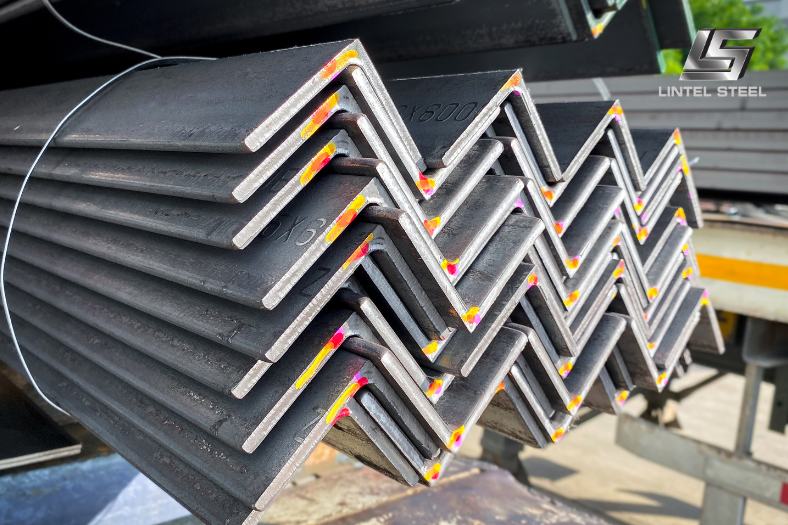
A steel angle, also known as an angle bar or L-angle, is a steel section shaped like the letter “L.” It has two legs (sides) that meet at a 90° angle. These legs can be equal or unequal in length, depending on design requirements.
- Equal Angle: Both legs are the same length (e.g., 50×50×5 mm).
- Unequal Angle: Legs have different lengths (e.g., 75×50×6 mm).
Steel angles are commonly made from mild steel, galvanised steel, or stainless steel, depending on the environment and application.
Understanding Steel Angle Dimensions
When discussing steel angle dimensions, it’s important to understand how these sections are measured and classified. Each steel angle is defined by three key parameters that determine its strength, load-bearing capacity, and suitability for specific structural uses.
Leg Length 1 × Leg Length 2 × Thickness
This is the standard format for expressing steel angle dimensions.
- The leg lengths represent the width of each side of the “L” shape.
- The thickness refers to the measurement of the steel plate used to form the angle.
For example:
- A 50×50×5 mm steel angle means both legs are 50 mm wide, with a thickness of 5 mm.
- A 75×50×6 mm steel angle has one leg 75 mm wide, the other 50 mm, and is 6 mm thick.
The correct size selection depends on the type of load, design requirements, and fabrication method. Equal angles (same leg length) are often used for symmetrical structures, while unequal angles provide greater flexibility when reinforcing corners or supporting asymmetrical loads.
Standard Size Range of Steel Angle Dimensions
In Australia and internationally, steel angles are manufactured in a wide range of sizes to meet various industrial and construction needs. Common size ranges include:
- Leg lengths: from 20 mm up to 200 mm
- Thickness: from 3 mm up to 20 mm
- Standard lengths (bar length): typically 6 metres or 12 metres
Larger and thicker angles are used in heavy-duty frameworks like bridges, high-rise buildings, or heavy machinery supports, while smaller sizes are suitable for lighter applications such as framing, brackets, or fencing.
Weight and Sectional Properties
In addition to physical dimensions, each steel angle has a theoretical weight per metre, which depends on the steel grade and cross-sectional area.
For example:
- A 50×50×5 mm equal angle weighs approximately 3.77 kg per metre.
- A 75×75×6 mm equal angle weighs about 6.7 kg per metre.
Knowing the weight helps engineers calculate structural load and material costs accurately during the design and fabrication process.
Dimensional Tolerances and Standards
Manufacturers follow industry standards such as AS/NZS 3679.1, BS EN 10056, or ASTM A36/A6, which specify tolerance limits for leg length, thickness, squareness, and straightness. These tolerances ensure consistency and allow angles to fit precisely in welded or bolted assemblies without excessive adjustment.
Finishes and Surface Treatments
While dimensions define the physical size, surface finish also impacts performance and longevity. Steel angles can be supplied in:
- Black (mill finish) for general fabrication
- Galvanised finish for corrosion resistance
- Primed or painted options for improved weldability and coating adhesion
By understanding these technical aspects of steel angle dimensions, engineers and builders can confidently select the right section size, weight, and finish for each application — ensuring safety, efficiency, and durability in every project.
Factors to Consider When Choosing Steel Angle Dimensions
Selecting the right steel angle dimensions is critical to ensuring the strength, safety, and cost efficiency of any structural or fabrication project. Each dimension — including leg size, thickness, and length — directly influences how the steel angle performs under load, how easily it can be fabricated, and how long it will last in service. Below are the key factors that engineers, builders, and fabricators should evaluate before making a decision.
1. Load-Bearing and Structural Requirements
The most important factor when determining steel angle dimensions is the load the section will carry.
- Heavier loads require angles with larger leg sizes and greater thickness, which provide higher moment of inertia and bending strength.
- For light framing or non-structural applications, smaller and thinner angles are usually sufficient.
- When designing for tension, compression, or bending, the section modulus and area moment must be checked against the expected forces to avoid deformation or failure.
Engineers often consult structural steel tables or software to choose the most efficient size that balances strength and weight, ensuring the structure remains both safe and economical.
2. Structural Purpose and Orientation
The design purpose greatly affects the choice between equal and unequal steel angle dimensions.
- Equal angles (e.g., 50×50×5 mm) are ideal when loads are applied evenly in both directions, such as in frames, trusses, or corner supports.
- Unequal angles (e.g., 75×50×6 mm) are better suited for conditions where one leg needs to carry more load or provide greater surface contact, such as in brackets, lintels, or unequal load-bearing structures.
- In composite structures, unequal angles also make it easier to connect dissimilar materials or accommodate space constraints.
Understanding how the angle will be positioned — vertically, horizontally, or diagonally — is essential for choosing a section that efficiently resists stress in the intended direction.
3. Corrosion Resistance and Environmental Conditions
Environmental exposure significantly affects the lifespan of steel components.
- For indoor applications, standard mild steel with primer coating is often sufficient.
- In outdoor or marine environments, it’s best to select galvanised steel angles, which feature a zinc coating that protects against rust and moisture.
- For highly corrosive industrial areas or food processing facilities, stainless steel angles (usually grades 304 or 316) offer superior chemical resistance and long-term durability.
When choosing steel angle dimensions, also factor in the additional thickness that may come from galvanising or coating, as this can slightly alter fit or bolt hole alignment in precision assemblies.
4. Fabrication and Installation Efficiency
The ease of fabrication is another important consideration.
- Larger angles may require heavy-duty cutting and drilling tools, while smaller sections can be processed quickly with lighter equipment.
- Consider how the angles will be cut, welded, drilled, or bolted, and whether they need to fit into pre-fabricated components.
- Ensure that the steel angle dimensions match the project’s tolerances to reduce on-site modifications and wastage.
For large-scale fabrication projects, using standardised dimensions helps simplify sourcing and ensures faster replacement or maintenance in the future.
5. Material Grade and Strength Specifications
Different grades of steel (such as AS/NZS 3679.1 Grade 300, ASTM A36, or EN 10025 S275) offer varying yield strengths and toughness.
Choosing the appropriate material grade ensures the angle performs well under expected loads and conditions. For instance, high-strength low-alloy (HSLA) steel may allow for thinner dimensions without compromising load capacity, helping to reduce overall weight and material costs.
6. Connection Details and Compatibility
Always consider how the steel angle will connect with other components — beams, plates, or fasteners.
- Ensure that bolt hole spacing, welding surfaces, and flange overlaps correspond with the chosen steel angle dimensions.
- For complex frameworks or prefabricated assemblies, accurate dimensioning avoids alignment issues during installation.
Precision in connection design improves safety, reduces vibration, and enhances the structure’s overall rigidity.
7. Cost and Availability
Finally, balance performance with practicality.
Standard steel angle dimensions are typically more cost-effective and easier to source from local suppliers. Custom sizes may provide better fit or strength but can increase production time and cost. Working with an experienced steel supplier like Lintel Steel ensures access to a wide range of stocked dimensions, quick turnaround, and material certification for every order.
By carefully evaluating all these factors, you can select the most suitable steel angle dimensions for your project — ensuring structural integrity, fabrication efficiency, and long-term value.
Common Applications of Steel Angles
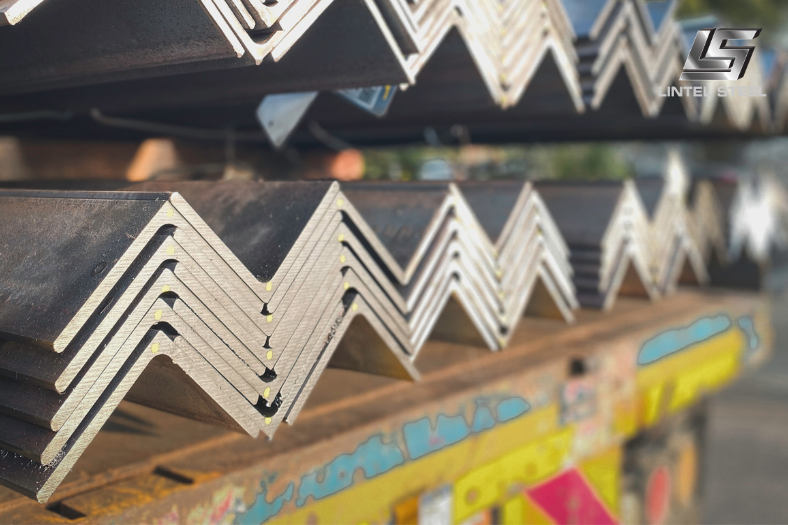
Steel angles are essential in:
- Building frameworks and roof trusses
- Support brackets and shelves
- Industrial machinery and conveyors
- Reinforcement and framing structures
- General fabrication and welding works
Their high strength-to-weight ratio and ease of installation make them ideal for both permanent and temporary structures.
Conclusion
Choosing the right steel angle dimensions ensures that your structure remains strong, stable, and cost-effective. Whether you’re designing a large commercial project or a small fabrication job, knowing the correct size, thickness, and material type helps achieve both safety and efficiency.
At Lintel Steel, we supply a full range of equal and unequal steel angles in various sizes, finishes, and grades — ready for fabrication and delivery across Perth. Contact us today for expert advice or a free quote within 48 hours.
Click here to get a quote and quantity takeoff for free.
You can find out more about us at our Fanpage Lintel Steel.


